How do curbs control a commercial site?
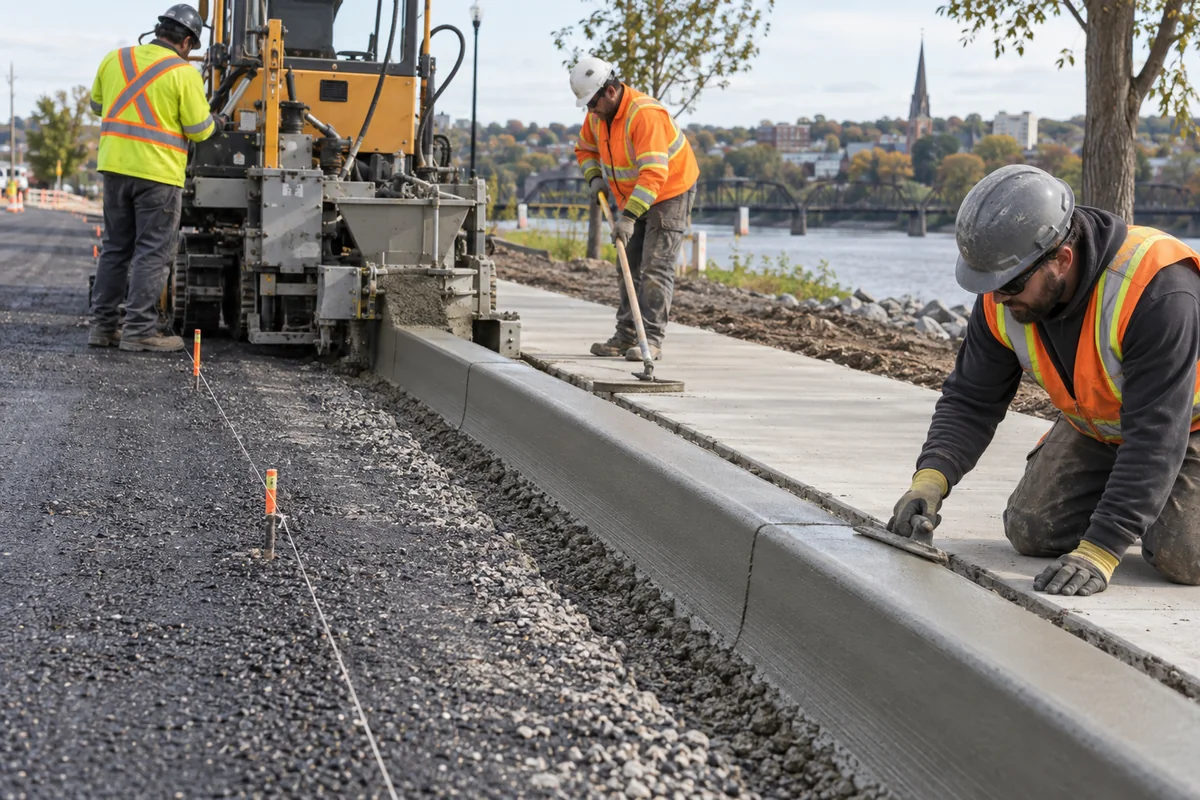
Curbs control a commercial site by separating vehicles from pedestrians, directing water, protecting landscaping, and defining pavement edges. Their profile and elevation must connect with catch basins, entrances, sidewalks, and asphalt grades. A curb that is set too high or low can trap water or create a poor transition for paving. Vehicle impacts and snowplows also place demands on reinforcement, base support, and joint layout. Surveyed control and coordination with civil drawings matter because the curb often becomes the reference for several later trades. Replacing it after paving or landscaping is complete multiplies disruption and restoration cost.
What makes a commercial sidewalk accessible and practical?
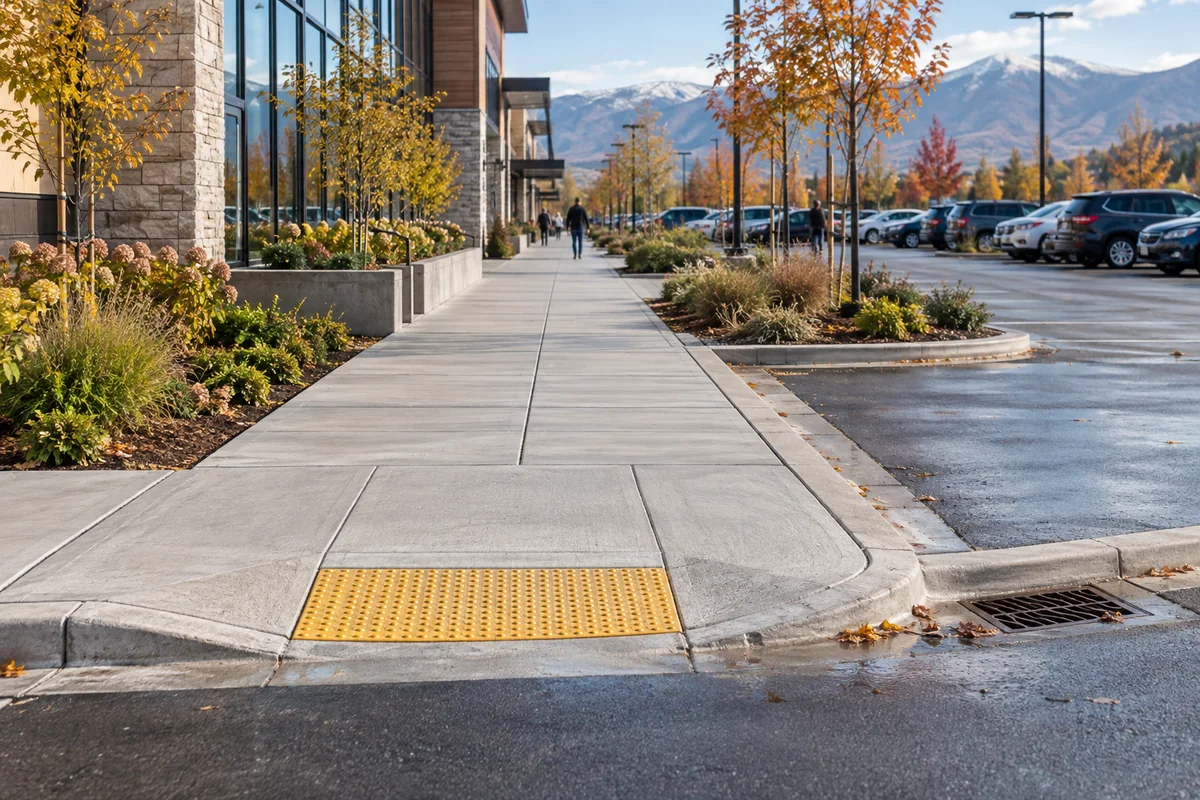
A commercial sidewalk becomes accessible and practical when its clear width, running slope, cross slope, curb ramps, landings, entrances, and surface transitions follow the applicable design. The concrete must also drain without creating ponding or abrupt lips. Accessibility is not achieved by appearance alone; small elevation errors can create barriers or water problems. Forms and grades should be checked before placement, and connections to existing walks require careful review. Correct finishing provides traction without making the surface unnecessarily rough for mobility devices. Project drawings and local requirements should define the route, while field execution preserves those dimensions.
Why do sidewalk panels crack or lift?
Sidewalk panels crack or lift when base support changes, tree roots grow, water reaches frost-susceptible material, joints do not manage movement, or heavy vehicles cross an area not designed for them. Settlement creates lips that collect water and become trip points, while lifted panels can catch plows. Repair choice depends on the cause and severity. Grinding may address a small stable lip, but it will not stop continuing root or base movement. Replacement allows the underlying condition, drainage, thickness, and joint alignment to be corrected. A site review should follow the path of water and traffic rather than treating each crack as an isolated cosmetic flaw.
How should curb and sidewalk work be phased at an open property?
Curb and sidewalk work should be phased around accessible entrances, fire routes, deliveries, tenant hours, and safe separation from excavation and wet concrete. Temporary routes need clear signs and a stable surface. Cutting and removal create noise and dust, while forms may remain in place beyond the placement day. Businesses should communicate closures before work starts and protect the curing concrete from shortcuts or carts. Short phases can preserve access but add joints and mobilization. A coordinated sequence identifies which entrance remains available and when each completed area can safely return to service.
What exterior finish and curing details matter?
Exterior finish and curing details matter because the surface must provide traction and withstand weather without being damaged during early strength development. A consistent broom texture is common for walks, while curb faces need clean consolidation and edges. Overworking water into the surface can weaken it, and inadequate curing can increase shrinkage and reduce durability. Hot sun, wind, cold, and rain each require different protection. The concrete mix should suit exterior exposure as specified, and owners should understand later sealing or maintenance recommendations. Good curing is mostly invisible when complete, but it has a lasting effect on the finished concrete.
What information is needed for a commercial site-concrete estimate?
A commercial site-concrete estimate needs drawings or measured quantities, curb profile, sidewalk width, grades, ramps, entrances, concrete specification, reinforcement, base, demolition, disposal, traffic control, restoration, and phasing. Identify utilities, trees, catch basins, asphalt limits, landscaping, bollards, signs, and occupied entrances. If accessibility upgrades are part of the work, provide the design requirements rather than asking the concrete crew to invent slopes in the field. Clear quantities and interfaces help compare complete proposals and reduce disputes over restoration after removal.
Discuss your project
Share the location, scope, timing, and any site conditions that may affect the work.