What should be assessed before a concrete crack is repaired?
A crack should be assessed for width, depth, pattern, movement, moisture, elevation change, and relationship to joints or structural elements. A narrow stable shrinkage crack is different from a moving crack caused by settlement, frost, overload, or structural movement. Filling the surface without understanding the cause may improve appearance briefly while the crack continues below. Owners should note when the crack appeared and whether it opens seasonally or leaks. Correct assessment guides the choice between sealing, routing and filling, structural review, slab stabilization, drainage work, or replacement. Structural concerns belong with a qualified engineer rather than a cosmetic repair decision.
When can a concrete surface be resurfaced?
A concrete surface can be resurfaced when the underlying slab is sufficiently stable and sound to support a bonded overlay or treatment. Resurfacing may address widespread wear, shallow scaling, texture, or appearance without removing the full slab. It is not suitable for hiding major settlement, active structural cracks, widespread delamination, or an unstable base. Surface preparation is critical because the new material needs clean, profiled concrete with weak material and contamination removed. Moisture and exposure also affect product choice. A test area and manufacturer requirements may be appropriate when appearance or adhesion is uncertain.
Why do patch edges fail around industrial traffic?
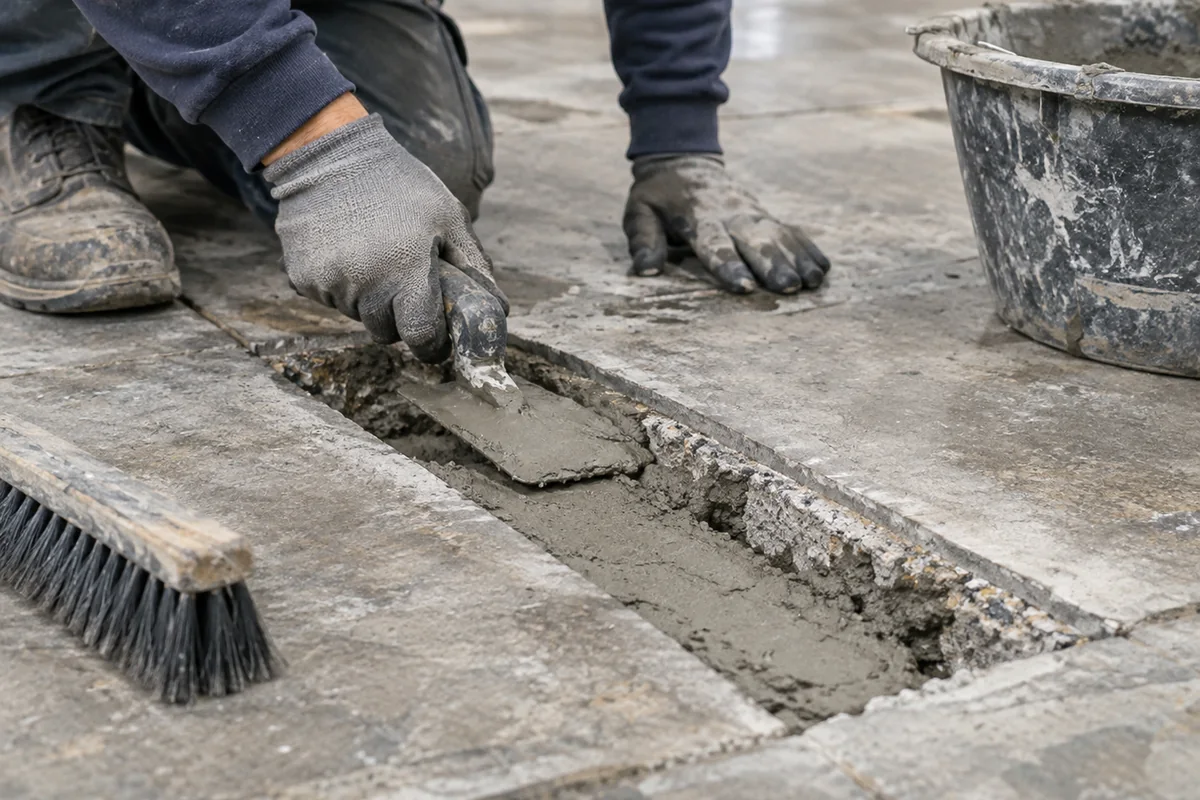
Patch edges fail around industrial traffic when the repair is too shallow, poorly bonded, weak at the perimeter, or placed over continuing movement. Hard forklift wheels and steel equipment strike any raised or unsupported edge repeatedly. A durable repair usually requires removal to sound concrete, a defined geometry, proper surface profile, compatible material, and curing before traffic returns. Feathered edges often lack enough material to resist impact. The work should also address joint function and base support where they caused the original damage. Scheduling enough shutdown time for preparation and cure is more effective than reopening a rushed patch and repeating the repair.
How are deteriorated concrete joints repaired?
Deteriorated concrete joints are repaired by removing loose material, rebuilding damaged edges, and restoring a joint profile that matches expected movement and traffic. The repair material must bond to sound concrete and tolerate the service conditions. Filling an active joint rigidly can move damage beside the repair, while leaving broken edges exposes them to further impact. Industrial and commercial owners should identify vehicle wheels, wash-down, temperature changes, and downtime. Joint repair is often staged along travel routes so operations can continue, but each phase needs protected cure time and clean transitions.
When is full concrete replacement the more responsible choice?
Full replacement is more responsible when deterioration or movement is widespread, the slab has lost base support, drainage continues to cause damage, reinforcement corrosion is extensive, or the remaining concrete cannot provide a sound repair bond. Repeated patches can cost more over time while leaving uneven surfaces and recurring closures. Replacement allows the base, thickness, reinforcement, joints, drainage, and finish to be corrected together. It also creates more disruption and disposal, so the comparison should consider expected use and remaining service rather than appearance alone. A clear assessment can separate isolated repairable areas from sections that need rebuilding.
Which details help price concrete repair work?
Concrete repair pricing needs the location, use, affected area, crack or spall dimensions, moisture, movement, traffic, access, prior repairs, contamination, and desired appearance. Provide close and wide photos with a scale, plus drawings when structural concrete is involved. Identify shutdown limits and the earliest time the area must return to traffic. A site review may still be necessary because tapping, sounding, or limited removal can reveal more deterioration than the surface shows. Quotes should state preparation, repair depth assumptions, material, curing, protection, and how unforeseen hidden damage will be handled.
Discuss your project
Share the location, scope, timing, and any site conditions that may affect the work.